Posture Correctors for Desk Workers — Do They Actually Work?
Posture correctors and wearable sensors examined against current research — what actually changes posture, what does not, and the ergonomic adjustments that matter more.
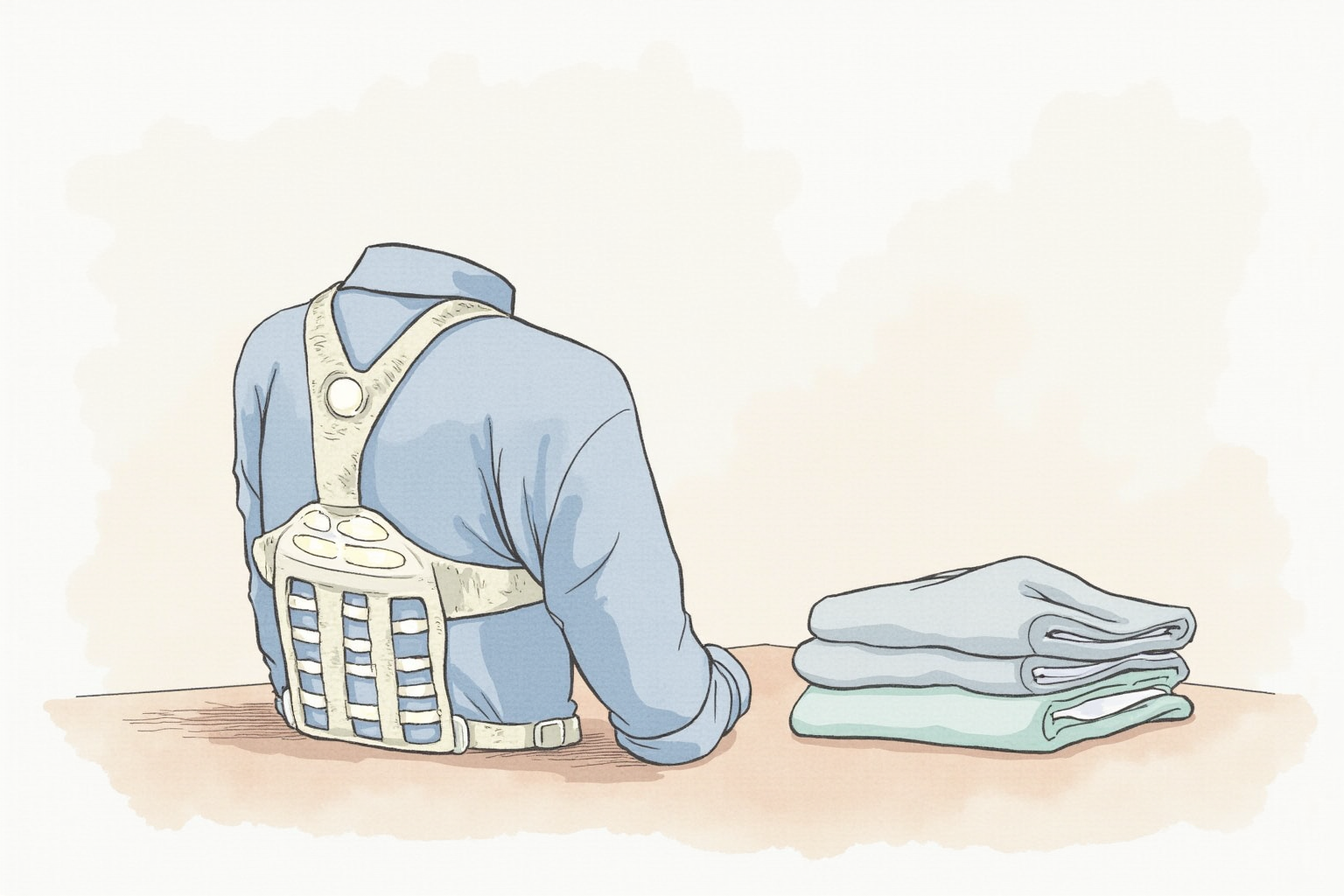
The posture corrector market promises a quick fix to a problem that does not have a quick fix. “Wear this brace and your posture will improve” sells well because the alternative — adjust your workstation, strengthen your postural muscles, develop awareness through repeated breaks — sounds like work. The brace is the appealing shortcut, and the appeal is why the market for cheap fabric posture braces grew tenfold between 2018 and 2024.
The research evidence in 2026 supports a measured conclusion: posture correctors produce short-term postural change while worn, can serve as awareness aids when used briefly, and do not produce lasting postural improvement on their own. The lasting fix involves workstation ergonomics, muscle strengthening, and behavioral awareness — interventions that the brace can support but cannot replace.
- Why passive braces produce short-term change but not lasting improvement
- Posture sensors — the more effective category for behavior change
- Ergonomic adjustments that fix posture at the source
- Strengthening exercises that pair with brace or sensor use
- Top picks across $20-100 budget range
Why braces help short-term but not long-term
A posture brace works by pulling the shoulders back via crossed straps or a figure-eight harness. While worn, the brace physically prevents forward shoulder rounding and reminds the wearer of upright alignment. The mechanism is simple and the short-term effect is real.
The problem is what happens after removal. Two patterns emerge consistently in research and clinical observation:
The crutch effect. The wearer comes to rely on the brace for posture. When the brace is removed, the same forward slouching returns immediately. The muscular control needed for sustained upright posture has not been developed.
Muscle disuse. Postural muscles (rhomboids, lower trapezius, deep neck flexors) are activated by holding shoulders back against gravity. When the brace does this work, the muscles are partially deactivated. Prolonged daily use over weeks can produce mild deconditioning of these muscles, making independent posture harder to maintain.
Mayo Clinic and most physical therapists describe posture braces as “training wheels” — useful for short-term awareness, harmful if relied upon for sustained postural control. The recommended use pattern is 30-60 minutes daily during desk work, paired with strengthening exercises that build the muscular capacity for unsupported posture.
Posture sensors — the more effective category
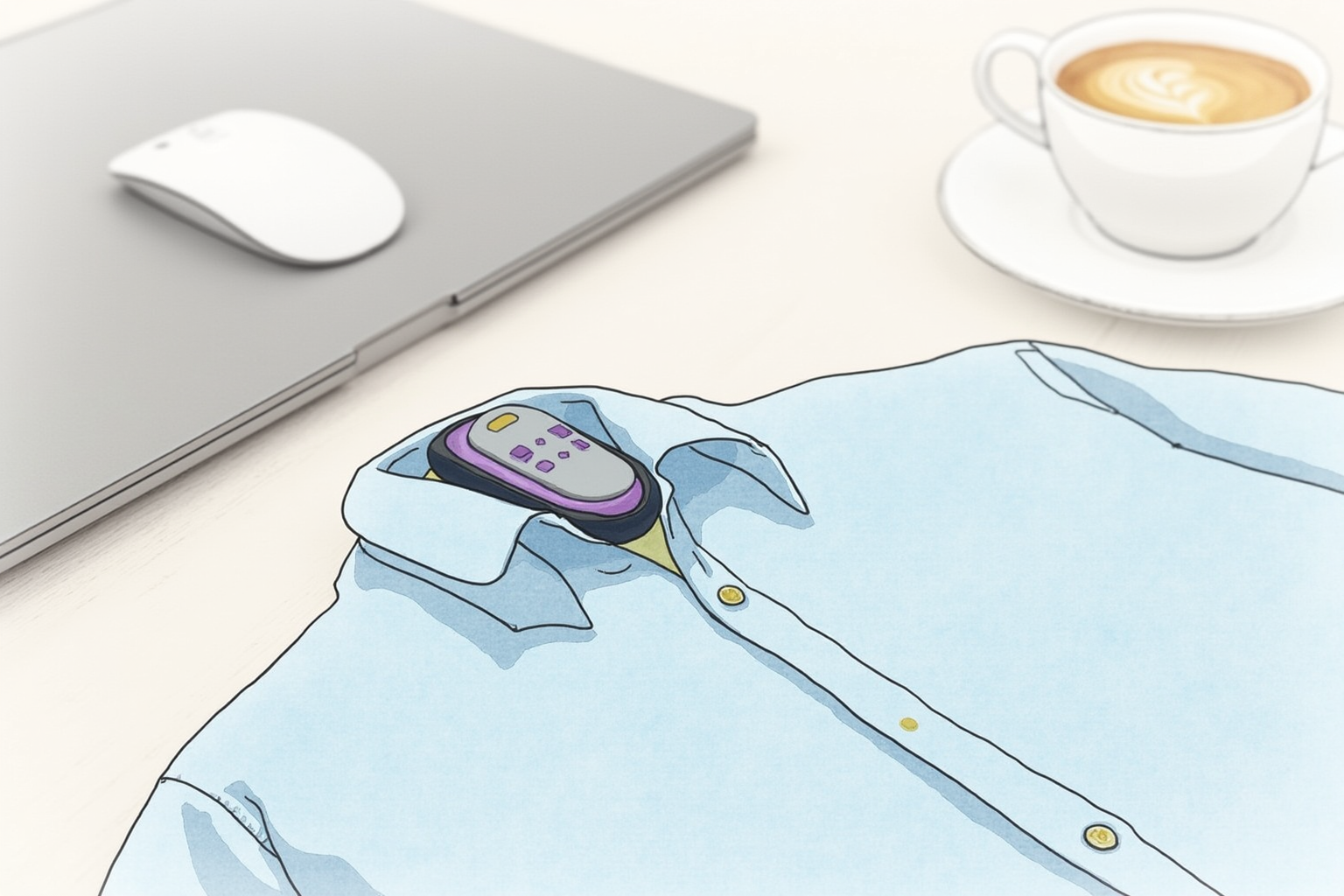
The newer category of posture sensors (Upright Go 2, Lumo Lift, body-attached devices) operates on a different mechanism. Rather than physically correcting posture, the sensor adheres to the upper back, calibrates to the user’s neutral posture position, and vibrates when slouching is detected for longer than a configured threshold (typically 5-15 seconds).
The mechanism is behavioral. The vibration is a cue to consciously adjust posture. Over weeks of consistent use, the wearer develops automatic awareness of slouching and the muscular memory to correct it. The sensor is not doing the postural work; the wearer is.
Studies of behavioral posture interventions show that 4-8 weeks of consistent daily use produces measurable improvement in baseline posture even after the sensor is removed. The mechanism is similar to wearing a step counter for fitness — the device makes the user conscious of behavior, the consciousness drives habit change, the habit persists once formed.
Upright Go 2 dominates the consumer market in this category at $80-100. The device runs for 8-10 hours per charge, syncs to a smartphone app for posture tracking, and includes a 5-15 minute daily training mode that builds awareness without all-day wear.
The ergonomic root causes
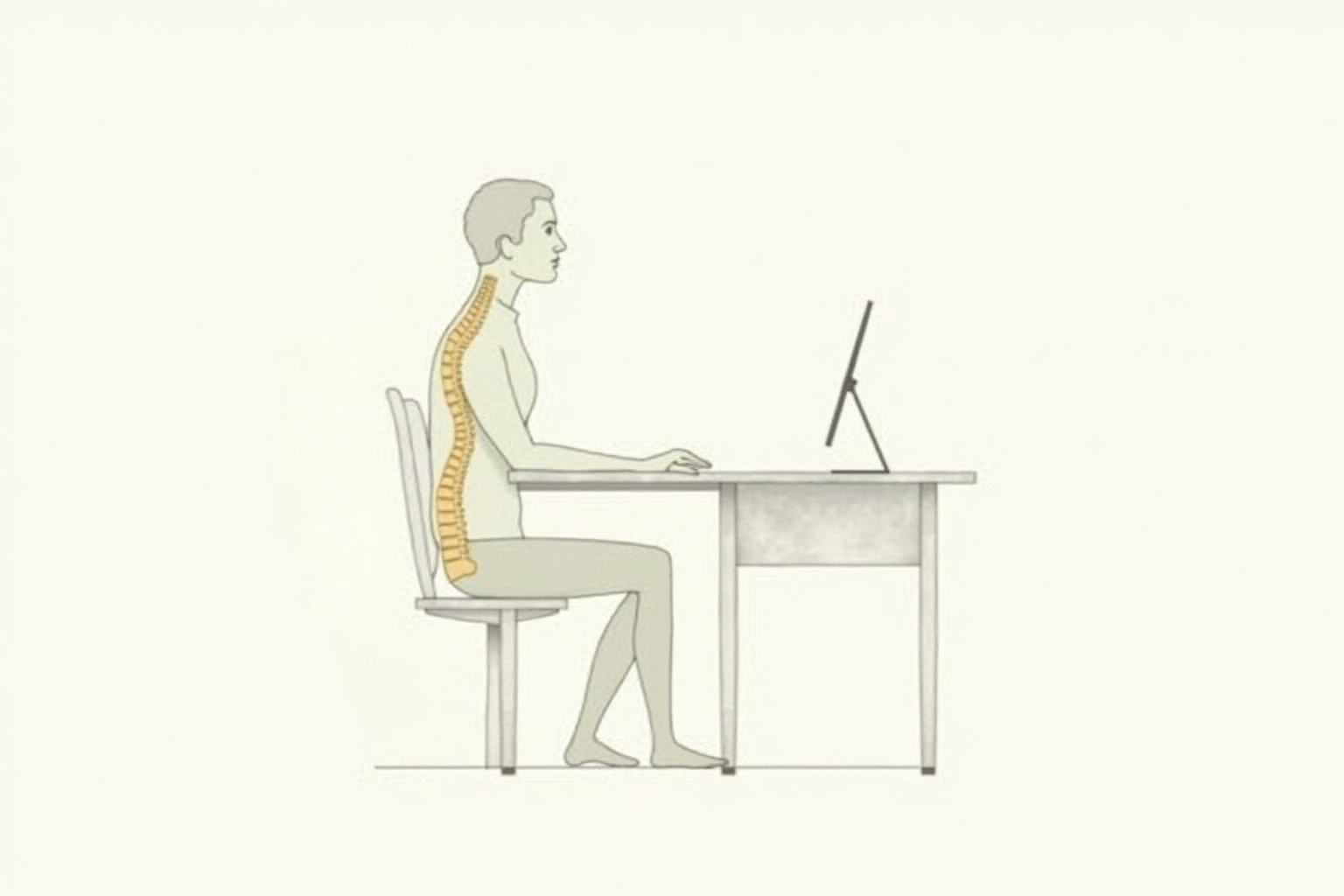
Before buying any wearable, fix the workstation. Poor desk posture is most often caused by ergonomic mismatch, not muscular weakness:
Monitor too low forces the head forward and down, producing the classic “computer neck” forward head posture. Fix: raise the monitor so the top edge is at or just below eye level. A monitor arm or a $20 stand solves this.
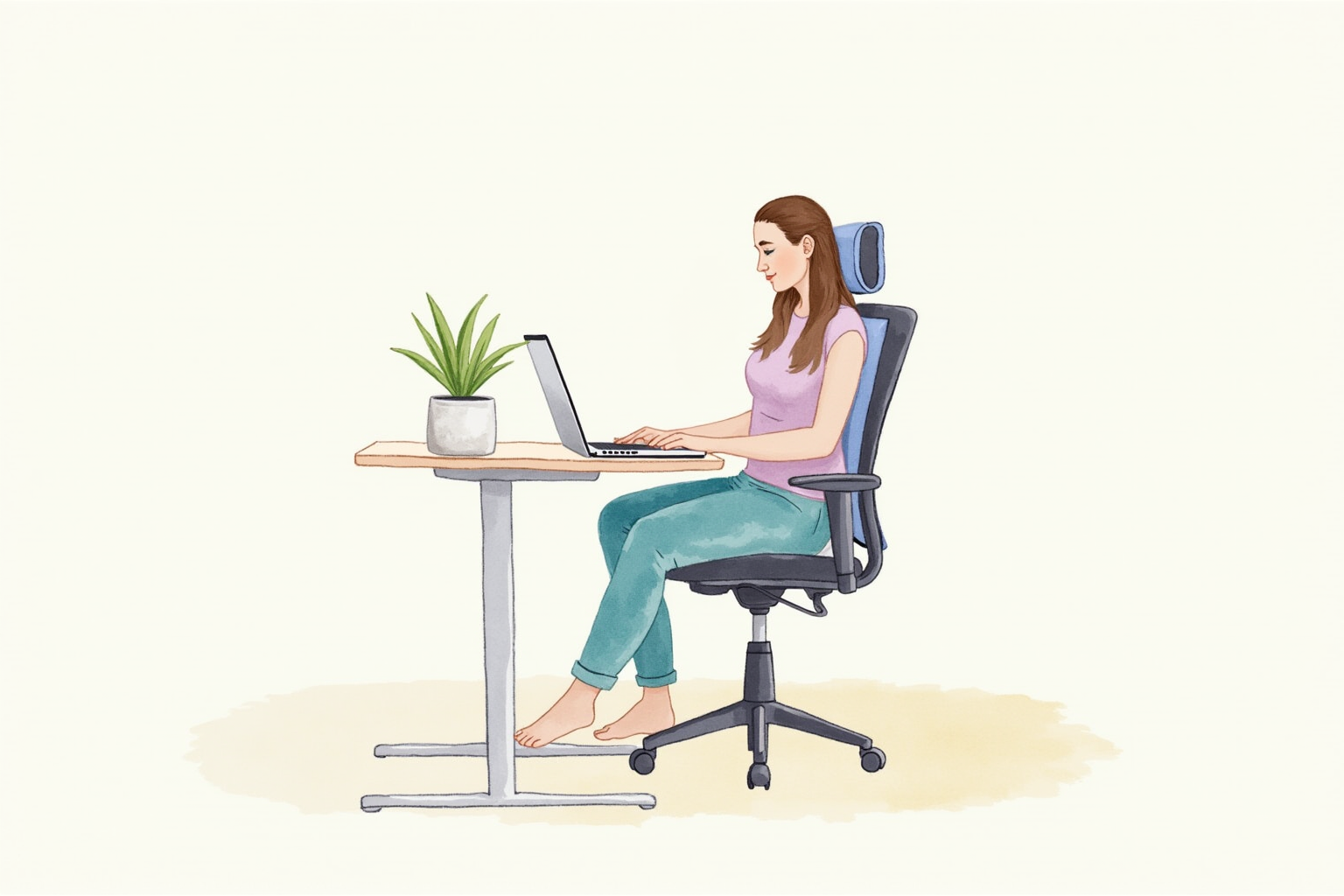
Chair too low or too high misaligns the keyboard and mouse with elbow height. Fix: adjust seat height so feet are flat on the floor and elbows are at 90-110 degrees when typing.
No lumbar support causes the lower back to round and the upper back to compensate by hunching. Fix: ergonomic chair with proper lumbar curve, or a lumbar pillow added to the existing chair.
Keyboard too far causes forward shoulder reach. Fix: bring the keyboard closer, ideally within 12 inches of the chest, with the elbows bent close to 90 degrees.
These four adjustments fix forward head posture, slouching, and shoulder tension at the source. The chair and monitor positioning produce more lasting posture improvement than any wearable brace can.
Strengthening exercises that matter
Posture is held by muscles. When postural muscles are weak from sedentary lifestyle, the body defaults to slouched alignment because slouching takes less muscular effort. The intervention is targeted strengthening:
Rows (resistance bands or light dumbbells, 3 sets of 12, 3x per week) build the rhomboids and middle trapezius that hold shoulders back.
Y-T-W exercises (lying face-down, arms in Y, T, W positions, 3 sets of 8 each) strengthen the lower trapezius and external rotators that prevent forward rolling.
Chin tucks (gentle pull of the chin back, holding 5 seconds, 10 reps, throughout the day) train the deep neck flexors that resist forward head posture.
Cobra pose or prone press-ups (lying face-down, pressing chest up, 10 reps daily) reverses the forward thoracic flexion of sustained sitting.
Ten minutes per day of these exercises produces measurable postural improvement within 4-6 weeks. The brace cannot deliver this; the muscles can.
Top picks across budgets
Upright Go 2 Posture Sensor
Price · $80-100 — best behavioral pick
+ Pros
- · Adheres to upper back and vibrates on slouching detection
- · Smartphone app tracks posture data and trains awareness over weeks
- · Daily training mode (15-30 min) produces lasting habit change
− Cons
- · Adhesive pads need replacement every 1-2 weeks ($10-15 per pack)
- · App dependency — must keep phone nearby for full functionality
Paid affiliate link. Price, availability, and ratings can change; verify details on the retailer page before buying.
Comfybrace Posture Corrector (Adjustable)
Price · $25-40 — budget brace pick
+ Pros
- · Lightweight fabric design with adjustable shoulder straps
- · Wearable under clothing without visible bulk
- · Lowest entry cost into the category for trial use
− Cons
- · Passive correction — does not train muscle memory
- · Prolonged daily use risks muscle deconditioning per physical therapy guidance
Paid affiliate link. Price, availability, and ratings can change; verify details on the retailer page before buying.
Truweo Posture Corrector (Premium Brace)
Price · $30-55 — mid-range brace pick
+ Pros
- · Higher-quality fabric and adjustable straps than budget braces
- · Reinforced back panel provides firmer correction without sharp pressure
- · Available in male/female anatomical fits
− Cons
- · Same passive-correction limitations as any brace
- · Cannot replace the muscular strengthening required for lasting change
Paid affiliate link. Price, availability, and ratings can change; verify details on the retailer page before buying.
The buying decision
For most home-office workers concerned about posture, the right priority order is: ergonomic chair and monitor arm first ($300-500 combined), strengthening exercise habit second (free), Upright Go 2 sensor third ($80-100). The brace category sits at the bottom of the priority list because it addresses symptoms (slouching) rather than causes (workstation, muscle, habit).
For users who want a quick awareness aid during a transition period — say, starting a new role with heavy desk work and wanting to build posture awareness — the Upright Go 2 produces real behavioral change over 4-8 weeks of consistent use. The device is not a magic fix but a competent habit-formation tool.
For users who prefer passive bracing for short daily wear (30-60 minutes during specific tasks), the Comfybrace at $25-40 or the Truweo at $30-55 work as marketed for short-term postural support. Keep the use brief and pair with strengthening exercises so the postural muscles develop the capacity for unsupported posture.
Avoid extended daily wear of any brace. The muscle deconditioning risk is real even if mild, and the brace becomes a substitute for the muscular strength that lasting posture requires. Two hours per day maximum, ideally less.
Posture is built, not worn. The brace can scaffold the building process briefly; the construction itself requires workstation adjustment, muscular strengthening, and consistent daily awareness. The wearable is supplementary; the work is the actual fix.